By Sarah Nicastro, Founder and Editor in Chief, Future of Field Service
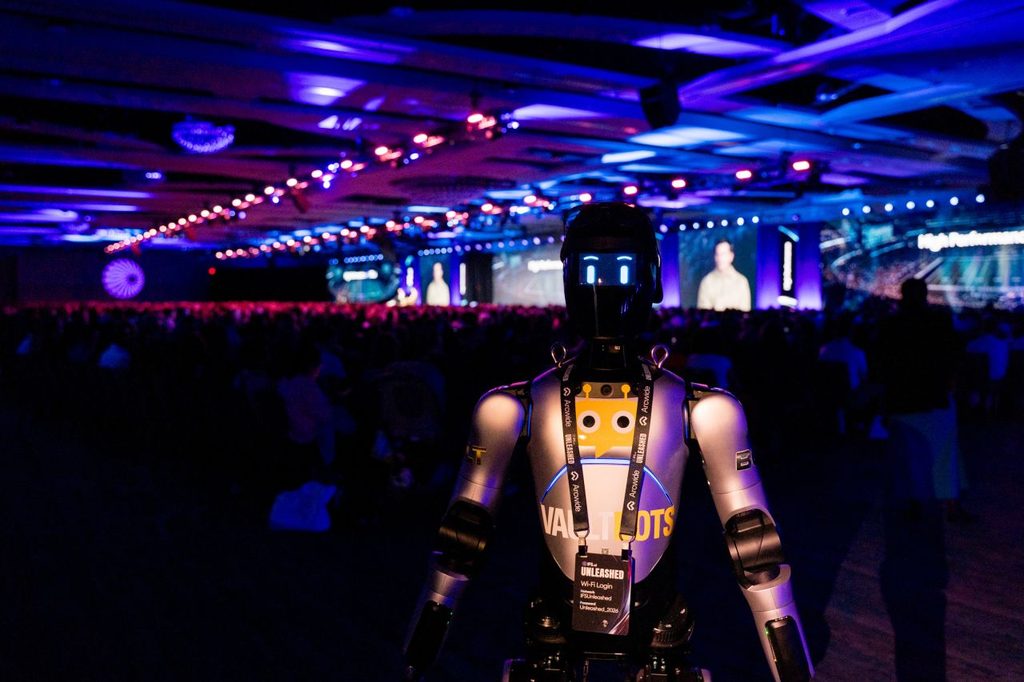
Last week, more than 3,000 people from over 100 countries descended upon Orlando, Florida for IFS Unleashed – including yours truly! I’ve been attending IFS Unleashed events (formerly called World Conference) since before my time at IFS began (in my former role, with Field Technologies, I attended as press). The 2026 version was truly something to behold.
I’m sharing my top 10 highlights from the week, part one here in this article and part two on Wednesday’s podcast. But a quick disclaimer first that these are my personal stand-out observations, not a list intended to be comprehensive of what the event covered in any way. The week was jam-packed with information, stories of transformation, displays of innovation, reminders of the power of networking and human connection, and much, much more. But among the action-packed days, these are a handful of moments that made me truly take pause and reflect.
#1: The Opportunity of Industrial AI Became Palpable
In his keynote, IFS CEO Mark Moffat shared a thought-provoking statistic: most industrial operations are running at 60% of their potential. Sixty percent. Just beyond half.
If this is true, imagine what’s possible. The possibility contained within that remaining 40% is really interesting to consider – so is what it would take for any individual organization to increase its number from sixty.
What stood out to me throughout the week was how the ways in which industrial AI and other forms of digital sophistication can help organizations reach more of their potential. Not hypothetically or theoretically, but tangibly. It was on display, session after session, all week long. Real businesses sharing real stories of what’s been done, and technology innovators showing what more is possible, today and tomorrow.
In previous events, there’s been a feeling of knowing AI is becoming important but not feeling sure precisely where and how. Last week, there were countless crystal-clear examples of how it’s having an impact and what more it can do.
#2: Success is a Constantly Moving Target, Therefore Agility is Key
Tony Hemmelgarn, President of Siemens Software, joined Mark on stage and in his session, he said, “We’re in the age of innovation, that means we’re never finished.”
This statement made me reflect on the reality of how not so long ago, success was a clearer – and more stable – target. You could set a bold goal, work toward it, and then take a breather once you achieved success. That model today would be a recipe for disaster, because success is a moving target and – as Tony stated – the work is never finished.
As both leaders and as businesses, I believe we need to do more reflecting – and reconciling – what this truly means. It seems that we know the game has changed, that the old playbook no longer works, but we aren’t sure what (all) to do about it.
To me, while much is uncertain and there’s no single path to follow, the attributes that are universally important are resilience, agility, tenacity. How are these characteristics represented in your business, or within your team? How do you nurture, evolve, and expand these qualities?
An era of innovation, in my opinion, doesn’t revolve around the technology – the true innovation is in the application of the technology; to make better decisions, faster. To serve customers in new ways. To build a business that’s nimble, able to continuously improve and evolve, and adept at change.
#3: Creativity Matters Now More Than Ever
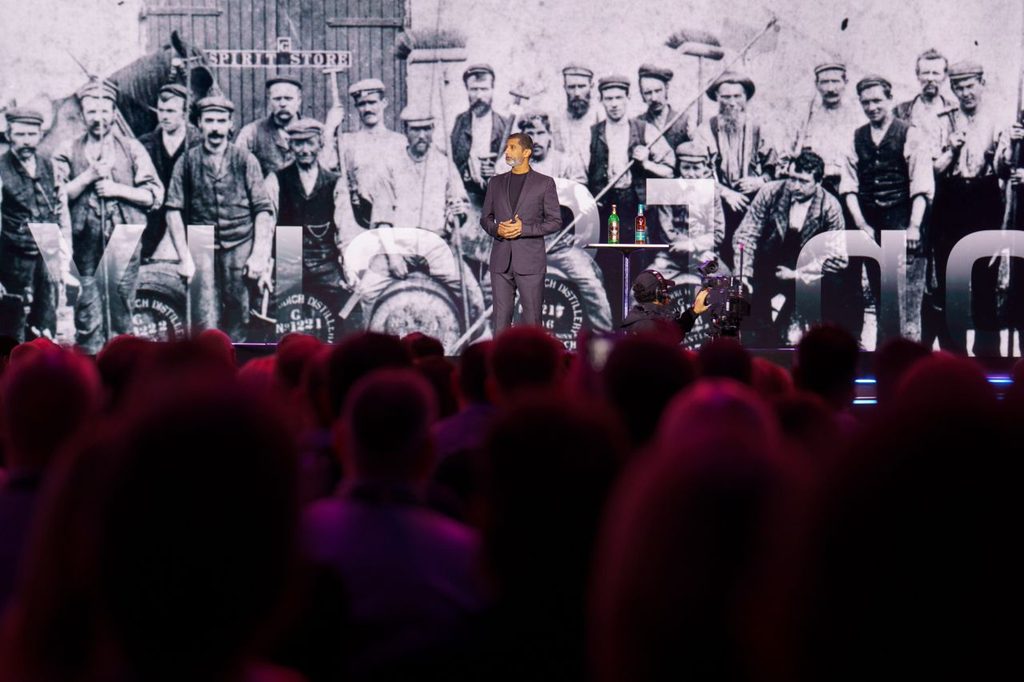
When Badri Narashimhan, CTO of William Grant & Sons took the stage to speak of the company’s transformation, he began by speaking about heritage. “For us, heritage is defined not by history, but by character,” he said. “We pride ourselves on zigging where others zag; daring to do something different.”
For a business established in 1887, this ethos is refreshing – and so smart.
In the AI era, creativity will become even more of a competitive differentiator. Doing what you’ve always done well may have gotten you this far, but Badri’s wise words of daring to do something different will be increasingly important to reflect on in the coming years.
#4: How AI Helps Address the Workforce Gap is Clear, But #5. So is Reverence for the Human’s Unique Role
If you come here often, you know I feel strongly that the future will be won not by digital prowess or human touch, but by the perfect marriage of both. I was delighted, and honestly a bit surprised, at how fairly represented – and how well articulated – this crucial balance is throughout the week’s sessions.
From a variety of perspectives, the message was reinforced that AI is here to elevate human potential; to augment what our people – and therefore our businesses – are capable of, not to detract from, dilute, or threaten it.
There was framing of the realities of the workforce gap. Mark Moffat spoke of it in his opening keynote, giving one illustrative example that in the US, 500 aircraft sit without a technician to conduct necessary repairs.
Kiva Allgood, Managing Director of the World Economic Forum, spoke about the organization’s Smart Start program and its work to attract high-school age youth into industrial career paths. She reinforced the fact that, while AI is a powerful multiplier, a focus on people must remain at the core of what we do.
In the session with Badri mentioned above, Kriti Sharma, CEO of IFS Nexus Black joined him on stage to speak of the partnership. She shared that, when spending time with William Grant & Son’s frontline workforce, one experienced engineer said of the Resolve mobile application, “I don’t need this to do my job, but I can see how it brings others up to my level.”
Capture of tribal knowledge and how it can then be democratized among new talent entering the workforce is a powerful example of the role AI can play in helping alleviate some of the pressure of the workforce gap. Less experienced engineers who have a wealth of knowledge at their fingertips and support at the ready can create value for the business sooner, but are also more likely to feel fulfilled and be retained.
A series of leaders took the stage following Badri to showcase the impact AI is having on businesses across different service and asset-centric industries. Each example was a real-world illustration of how businesses gain back some of that potential being lost, but each also underscored the importance of people.
Mo Dawood, CIO of Eight Group, joined to talk about the company’s journey, explaining that each decision is made through a lens of people-centricity. He explained that he asks first, “Is it right for our people? And then, is it right for our customers?” Excellent anchoring for strategy. The example was shared how, with Resolve, documentation has been reduced from 25 minutes down to one with image analysis. Significant time savings that eases burden from the frontline’s day and lets them focus more time on what matters most.
Pedro Buhigas, CIO of Kodiak Gas Services, shared a glimpse into the company’s incorporation of agentic AI. He stated that, “our business is driven by people, but they’re a scarce resource – augmenting with agents helps with scalability.” Kodiak’s first IFS Loops agent is a material replenisher that helps technicians identify the right part for the asset, locate it within inventory, and, if needed, assists in procuring. The incorporation of just this one agent has increased the efficiency of that process by 85%.
Joe Marcella, VP of Planning & Performance, Technical Operations at Southwest Airlines shared the company’s journey of transitioning from paper and pen to digital as recent as 2021. When looking at where AI fits today and into the future, Joe said there’s a tremendous opportunity for AI to support the frontline workforce but reinforced that the best way to put it to its best use is to “find out what your employees need to do their jobs better.”
The way these examples (and others) brought clarity to specific AI use cases making a measurable impact today – but were shared by leaders who are framing its use by how it best elevates the human talent that makes service special – embodied the balance of digital prowess and humanity that is so important.
Believe it or not, that’s just the start! If you’re interested in part two of my top 10 moments of IFS Unleashed, tune in for this week’s podcast on Wednesday.