UNSCRIPTED - EPISODE 384
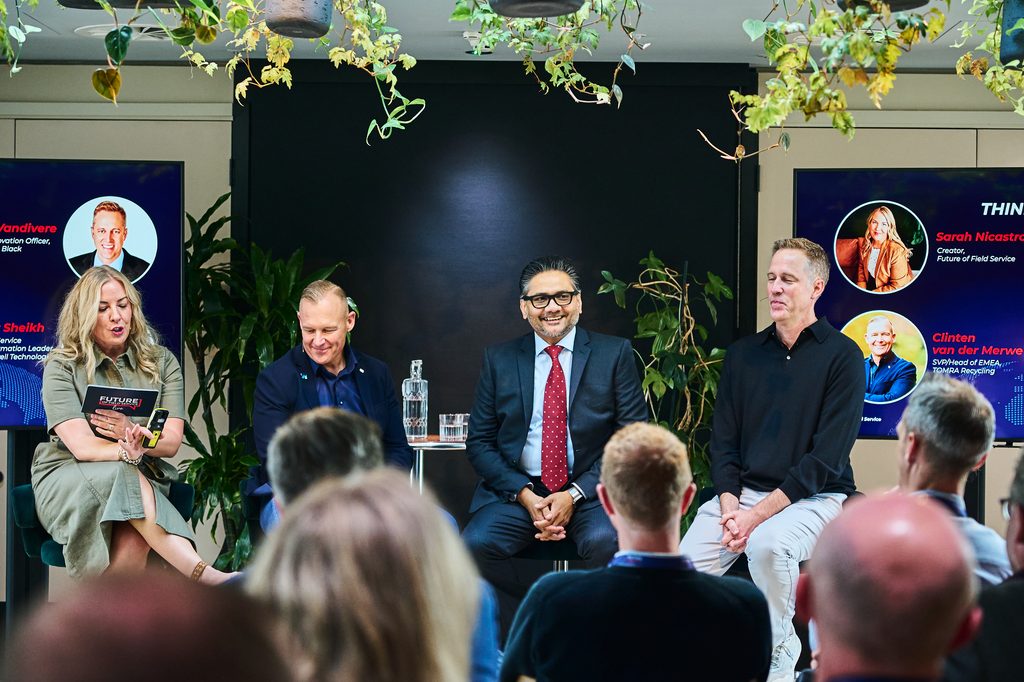
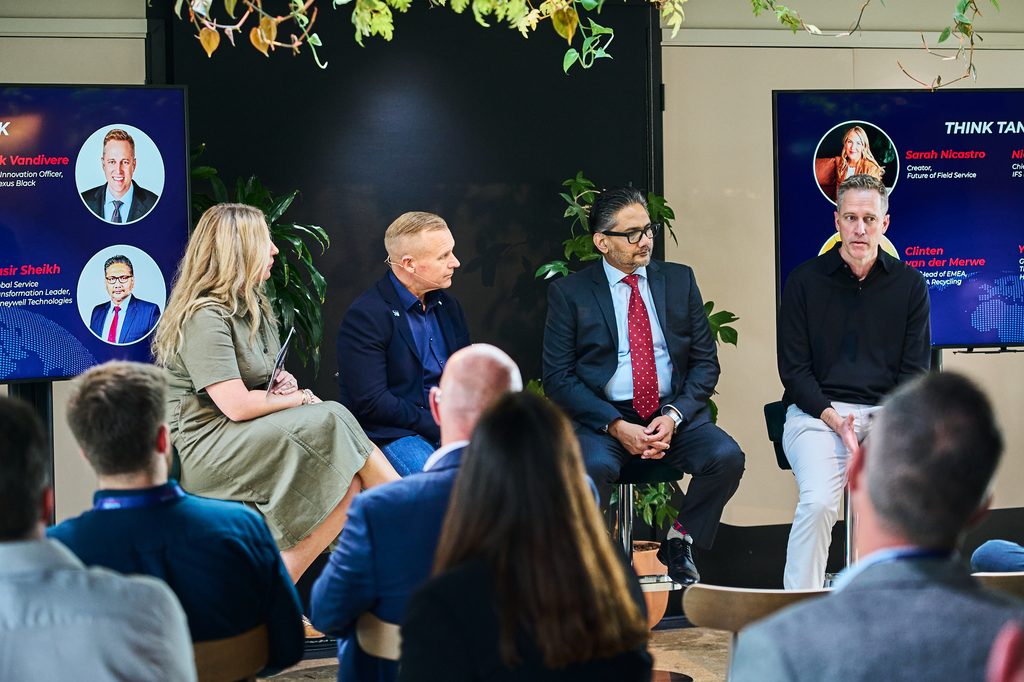
Think Tank from Future of Field Service Live London, featuring Clinten van der Merwe (TOMRA Recycling), Yasir Sheikh (Honeywell Technologies), and Nicholas Vandivere (IFS Nexus Black).
Technology decisions in field service organizations are made every day. And too often, the people expected to live with those decisions are the last ones consulted.
That gap between strategy and reality was the focus of this Think Tank discussion, filmed live at Future of Field Service Live in London. UNSCRIPTED host Sarah Nicastro brought together three leaders with very different vantage points on the problem: Clinten van der Merwe, SVP and Head of EMEA at TOMRA Recycling; Yasir Sheikh, Global Service Transformation Leader at Honeywell Technologies; and Nicholas Vandivere, Chief Product Officer at IFS Nexus Black.
The conversation was candid, grounded in real experience, and covered a lot of territory.
Who gets a voice in technology decisions?
It's a question most leaders think they've answered. The honest answer, as the panelists acknowledged, is usually more complicated.
Nick Vandivere laid out two failure modes he sees regularly. The first: technology decisions made entirely by IT and senior leadership, based on assumptions about what people in the field actually need. These implementations often crash on contact with reality. The second failure mode is subtler: going so far in the other direction that you end up building a slightly improved version of what already exists. Adoption might follow, but the return on investment rarely does.
The sweet spot, Nick argued, is having a clear organizational vision and then involving a cross-section of users early, specifically the people most likely to drive adoption later. And critically, recognizing that those people have day jobs and protecting their time accordingly.
"Make them the heroes in the story," he said. Creating content that shows the rest of the organization what good looks like is far more effective than top-down mandates. When the signal comes from peers, it lands differently.
Yasir Sheikh added the customer dimension. The decisions that actually stick are the ones that account for customer pain points as well as employee ones. Training a technician on a new tool matters, but the results are going to vary depending on context. His example: the same training program produced significantly different outcomes in Spain versus Germany, because the relationship dynamics between technicians and customers were fundamentally different.
Should employee experience be part of the business case?
All three panelists said yes, without hesitation. Clinten van der Merwe put it plainly: he'd seen experienced technicians hand in their resignations after a tool rollout that missed the change management piece entirely. Thirty years of expertise, gone, because the people side wasn't treated as seriously as the technical side.
"Change starts way before you implement the tool," he said.
Yasir agreed. If you're building something for employees, you can't treat their experience as an optional consideration.
AI anxiety, job displacement, and what leaders should actually say
The conversation turned to AI, which is where things got particularly interesting. A participant asked about managing trade union concerns, specifically around AI that removes or simplifies processes rather than just supporting existing ones.
A speaker from the floor shared her experience presenting directly to European trade union representatives. The winning argument wasn't a promise that no jobs would be lost. It was the research they'd done into a day in the life of a technician. Showing genuine understanding of the work was what got the green light.
Yasir made a distinction worth noting: much of the job loss anxiety around AI is being driven by economic conditions, not by AI itself. When AI appears in a headline alongside layoffs, it absorbs the blame regardless of cause. That conflation is making honest conversation harder.
Nick made a broader historical argument. Law is arguably the industry most affected by large language models. And yet job placement rates for top law school graduates are at an all-time high. The pattern tends to hold: technology that removes one task creates demand for the broader set of human skills around it.
Sarah brought it back to the leadership responsibility. "If you don't know if it will result in lost jobs, don't say it won't. Just be transparent about where there is uncertainty and what you can guarantee."
That's not a comfortable message, but it's the right one. Communicating with confidence about things you can't yet know is how trust gets eroded.
Making AI actually work for people
One of the more practical threads in the conversation was about how organizations can get quick wins from AI without waiting for a full enterprise transformation.
Nick's framing was simple: if an AI solution is adding steps to a process, something has gone wrong. The goal is a more information-rich environment with fewer steps, not a more complex one.
For organizations with legacy infrastructure, there's real opportunity in bolt-on tools that solve a specific, painful problem quickly. A participant described giving people simple AI agents to experiment with, and watching the ideas multiply once people understood what was actually possible.
"Start with the adventurers," Sarah said, referencing a past conversation about outcome-based service adoption. "Don't start with the detractors. Build momentum from the people who are already curious."
Yasir suggested thinking about AI the same way you'd think about Kaizen: continuous, targeted improvements rather than transformation for transformation's sake. And critically, invest in teaching people how to use it. Embedding AI into someone's browser and expecting them to figure it out is not a strategy.
The question worth asking
What runs through all of this is a single question that Sarah put to the room at the start: are we designing transformation for our people, or around them?
Getting that answer right changes everything downstream. Who gets consulted, what gets built, how it gets rolled out, and whether it actually gets used. Organizations that treat the human side as the foundation rather than a footnote tend to end up with technology that works, people who trust leadership, and transformations that stick.
The ones that don't tend to end up doing it twice.

Follow Sarah on LinkedIn for daily insights, behind-the-scenes reflections, and the conversations shaping the future of service.
Connect with Sarah Nicastro on LinkedIn
Follow Future of Field Service on LinkedIn for new articles, podcast episodes, and event updates as they go live.
Follow Future of Field Service
Subscribe to The INSIDER - our monthly newsletter with exclusive content you won’t find anywhere else.